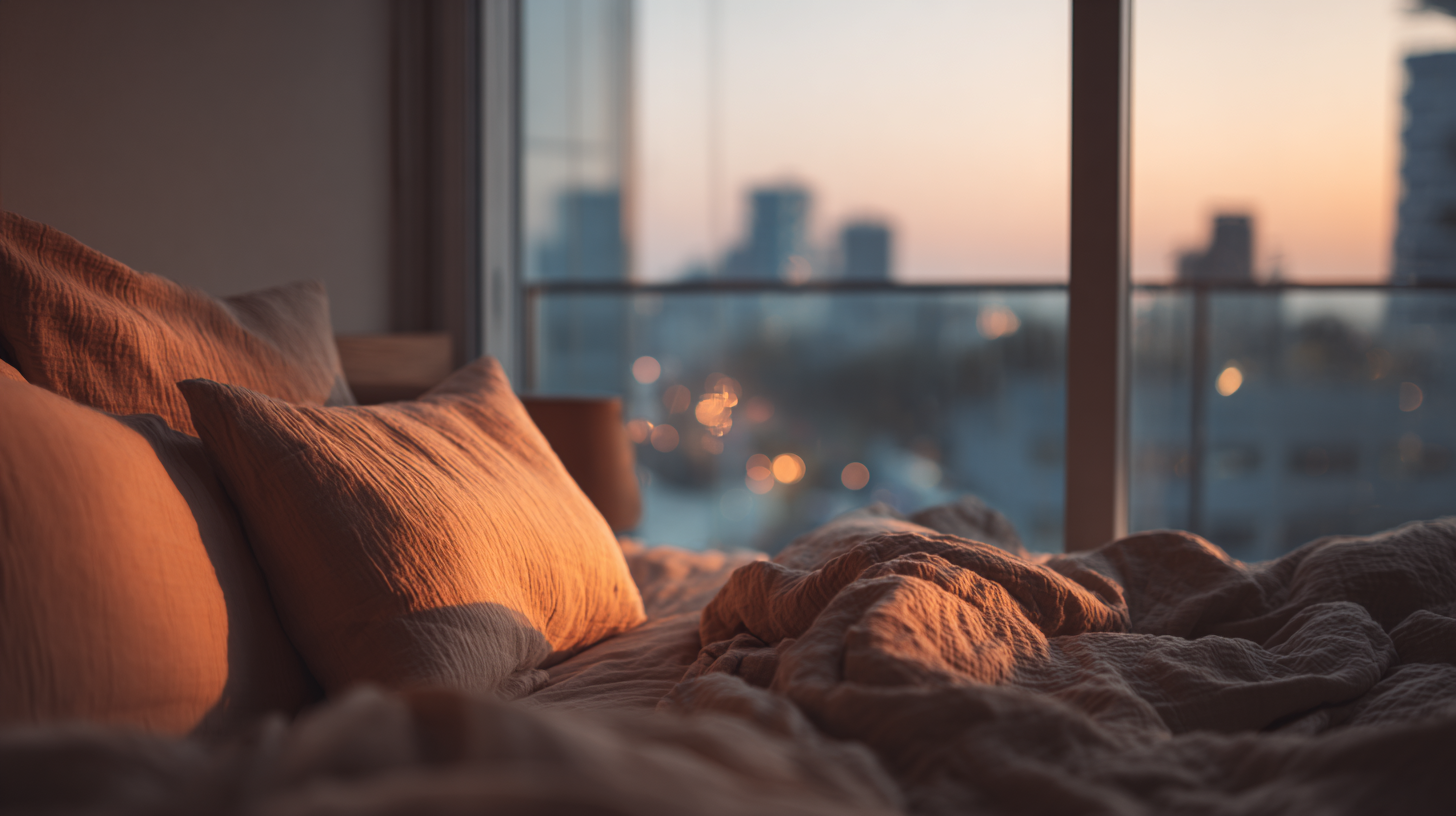
A city bedroom has a light problem that no amount of evening routine fixes. Matcha in the morning, yoga at night, a weighted blanket... none of it changes the fact that the street outside a Los Angeles condo is still bright at bedtime. That gap is exactly what smart shades are built for. Here is how the RYSE SmartShade and the Aura Roller Shade Driver compare, focused on what each one brings to sleep, comfort, and a daily routine.
Heads up: this post contains an affiliate link. If you buy through this link I may earn a commission, at no extra cost to you.
Why smart shades belong in a sleep routine
I know smart shades sound like a tech upgrade. The reason I care about them is narrower than that: what they do to the light in a bedroom, at both ends of the day.
What you want from them is short:
- Total darkness at bedtime without thinking about it
- Natural sunlight in the morning to wake you up gently
- A consistent routine that happens every single day
- One less thing to manage at night
A dark room is easier to sleep in and daylight is a kinder alarm than a phone. Neither of those is a revelation. The trick is getting them to happen every day without you. Shades are only one piece of a bigger setup, and the rest of what I run in the condo is here.
Two of the most popular options right now:
- RYSE SmartShade with the SmartBridge
- Aura Roller Shade Driver with the SmartLife app
Both will run a daily schedule, which is where the whole idea earns its keep.
RYSE vs Aura at a glance
Which one is the best fit for you?
RYSE SmartShade: the bigger, heavier shades
RYSE is rated for shades up to 9 ft by 9 ft or 10lbs.
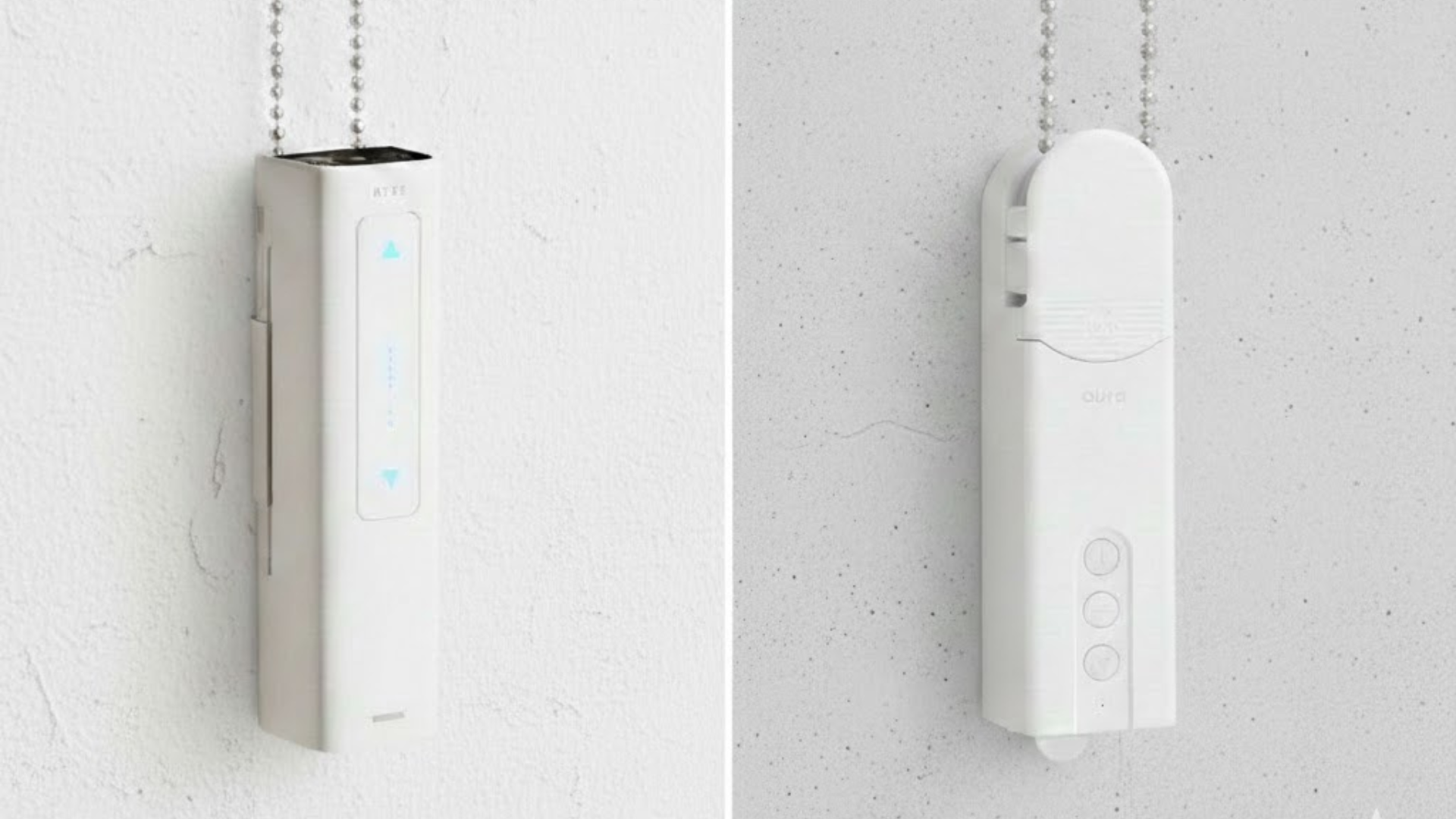
It uses a mounting bracket system. The bracket goes on the wall beside the window frame first, then the SmartShade clips into place. That little detail makes it feel like a real high end home appliance, and it means you can lift it off temporarily if you ever need to.
It is the more expensive of the two, and the headroom is most of what you are paying for. A wide blackout roller is a lot of shade to move twice a day, every day, for years.
Aura: small and light
Aura recommends roller blinds up to 3 kg, which works out at roughly 4 ft by 5 ft, and it wants at least two inches of window frame depth. Inside that range it is a lovely little thing. The whole unit presses onto the wall with the adhesive strip in the box. No bracket, no extra pieces.
It is about as easy as an install gets, and at $99 it is a low risk way to try the idea for the first time — as long as the shade is inside what it was built for.
Where mine ended up, and why
My bedroom window is a wide blackout roller, more shade than the Aura is built to pull, so that is where the RYSE went. The shade in my workout room is small and light, and the Aura has handled it without complaint since the day I stuck it on the wall.
That is a fact about my two windows, not a rule about the two products. Either one will go in any room in the house. Measure the shade, not the room.

The two schedules I run
This is my favourite part, because this is where it stops being a gadget and becomes a lifestyle.
Bedroom: a schedule for sleep
- Opens in the morning as a natural sunlight alarm
- Closes at night automatically at bedtime
So when it is time to sleep, the outside world is literally out of sight and out of mind.
Workout room: a schedule for privacy
That one runs a little differently:
- Opens in the morning
- Closes at night
- Plus an extra close time in the afternoon, for privacy during a workout
That is the sort of benefit you never think to ask for. Not having to think about shades mid workout is a small, real luxury.
One thing worth being clear about, because it changes what you spend. The RYSE needs the SmartBridge before it will run a schedule at all, and that is another $49.99. The Aura schedules straight from the SmartLife app on your phone; the Tuya hub is only in the picture if you want to open your shades by asking Alexa or Google. Work out which of those you actually want before you add anything to a cart.

RYSE feels like luxury wellness
Numbers aside, the RYSE feels like part of the building rather than a gadget stuck to it. The bracket, the weight of it in your hand, the way the shade lifts off and clips back on. In a room I am trying to keep calm, that turned out to matter more than I expected it to.
Aura is practical and so easy
The Aura is the opposite kind of pleasure. You press it onto the wall and it starts working. Nothing to align, nothing to drill, nothing to think about again, and I like it for exactly that.
What automating a shade does for a routine

This might sound dramatic, but automating a shade is what makes a routine feel real.
You stop negotiating with yourself at night. The room gets dark when it is time to sleep. Mornings start with natural light instead of an alarm shock. You wake up when you promised yourself you would.
What it will not do is fix everything else. It makes one thing consistent — the light in the room you sleep in — and leaves the rest to you. For the longer version of that argument, I wrote about what changing my condo actually did.